Psychological testing representative
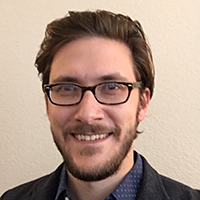 Justin Barry is a licensed psychologist with a passion for psychological assessment. Barry has spent the past six years serving in community mental health overseeing a psychological assessment program, supervising future psychologists (using a Relational Psychodynamic model), assisting in staff training, and retaining a small clinical caseload.
He believes in service to the underserved, the power of self-understanding and self-compassion, and shifting away from categorical and medicalized understandings of the human condition, all while advocating for healthy organizational systems and sensible reimbursement structures that reward quality (not just quantity).
Barry is a standing member of the Society for Personality Assessment, Colorado Assessment Society, and APA, and is proud to serve as an early career member of the Health Care Financing Advisory Group representing psychological assessment.
DPA representative
 London Breedlove (they/them) is a licensed psychologist and health care administrator who serves as director of professional affairs and policy at the Washington State Psychological Association (WSPA). Their work focuses on behavioral health policy, reimbursement and payment reform, workforce sustainability, and access to care. They lead statewide legislative and regulatory initiatives related to health care financing, practice sustainability, and behavioral health systems policy.
Breedlove has been active in WSPA leadership since 2018 and has served as board trustee, board president, and council representative to APA. They currently serve as chair-elect of APA’s Advocacy Coordinating Committee, helping guide national advocacy strategy related to behavioral health access, reimbursement, workforce sustainability, and health equity. Their policy work has included advocacy related to mental health parity enforcement, reimbursement for psychology trainees, and behavioral health payment reform. In 2025, they received the Karl F. Heiser APA Presidential Award for Advocacy.
In addition to their policy and leadership work, Breedlove has more than a decade of experience in integrated behavioral health within primary care and specialty treatment settings across academic and community-based systems. They currently serve in leadership and administration within a nonprofit behavioral health organization supporting individuals with high-complexity co-occurring disorders. Their work has focused on behavioral health integration and strengthening coordination across medical, behavioral health, and community-based systems.
Previously, Breedlove served as associate clinical professor and director of integrated behavioral health in the Department of Family Medicine at the University of Washington, where they led programs focused on behavioral health integration in primary care.
Raised in Poland, Breedlove’s professional interests include health systems transformation, financing and reimbursement policy, workforce sustainability, and improving access to behavioral health care in underserved communities. They earned a PsyD from the Illinois School of Professional Psychology and an Executive Master of Health Administration from the University of Washington.
Independent practice representative
 Gordon Herz is an independent practitioner in Madison, Wisconsin, and a former director of neuropsychology services in the Rehabilitation Medicine Department at Meriter Hospital.
Herz maintains allied health privileges at two hospitals and has chaired the committee that reviews psychologists’ credentials when applying for hospital privileges. He has been active in advocacy activities related to health care and health financing reform, including cochairing the APA Division 42 (Psychologists in Independent Practice) Task Force on Managed Care and Health Care Policy.
Herz is the former president of Division 42. He recently coauthored the chapter “Health Systems Issues and the Underserved” in Bringing Psychotherapy to the Underserved.
Herz regularly writes about trends in psychologists’ and other mental health professionals’ participation in Medicare and related issues such as reimbursement, provision of psychotherapy, and access to care issues in the Medicare population.
Member-at-large
 Charles M. Lepkowsky has been an independently practicing psychologist since 1985. He is a former chair of the Department of Child and Adolescent Psychiatry at Santa Barbara Cottage Hospital and a past president of the Santa Barbara County Psychological Association. Lepkowsky has served as clinical director and assistant administrative director for nonprofit community counseling agencies and worked full-time for two years in an inpatient psychiatric unit. He taught doctoral psychology courses for 14 years and has been on staff at local hospitals for over 33 years. He is active in patient and practice advocacy and legislative action, has published over 30 peer-reviewed journal articles, 10 textbook chapters, and has edited two textbooks. His research interests include geropsychology, neurocognitive disorders, collaborative care, personality disorders, medical psychotherapy, technology, epidemiology, and person-centered approaches. He is an APA fellow and the 2022 recipient of APA’s John D. Preston Award for Outstanding Contribution to Clinical Psychopharmacology.
Medicaid representative
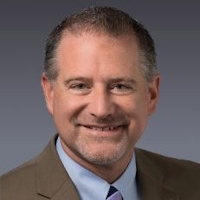 Peter D. Liggett is a principal consultant and licensed clinical psychologist in Mercer’s Government and Human Services Consulting practice in the Phoenix office. Liggett has experience consulting to state government health and human services agencies across the country with a focus on behavioral health, long-term services and supports, benefits design and modernization, integrated care models, alternative payment models, value-based payment, home and community-based services waiver programs, and workforce issues.
Before joining Mercer in 2021, Liggett was the deputy Medicaid director at the South Carolina Department of Health and Human Services, where he oversaw a staff of 200+ and operations of the behavioral health and long-term living programs. Since joining Mercer, Liggett has become involved with projects in Pennsylvania, Kansas, Arizona, Delaware, Connecticut, Missouri, Minnesota, and New Jersey involving value-based purchasing, behavioral health benefits design, long-term services and supports, and evidence-based service delivery models.
Liggett recently finished a 3-year term as a member and vice chairperson of the Board of Professional Affairs for APA. Before serving on the Board of Professional Affairs, Liggett was a member of the Committee for the Advancement of Professional Practice and was the president of the South Carolina Psychological Association.
Committee on Rural Health representative
 Reed Maxwell is a board-certified clinical psychologist in private practice and adjunct associate professor with Kansas City University. He serves on the APA Committee on Rural Health and the Kansas Psychological Association Board of Governors as a practice/service representative.
Member-at-large
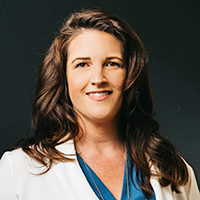 Lyn McArthur is the behavioral health director at Health West Inc., a federally qualified health center, located in southeastern Idaho. McArthur helped Health West develop and implement their behavioral health integration program in 2015. Currently, she is working on developing and integrating behavioral health into other areas of Health West’s services, including medication assisted treatment, hepatitis C treatment, and pediatric care. McArthur has a special interest in health psychology, including the treatment of eating disorders.
McArthur is originally from rural Kentucky and was drawn to Health West because of her desire to serve the underserved. She is a member of APA’s Committee on Rural Health.
McArthur has also served as the Idaho Psychological Association Advocacy Committee Chair, on several insurance boards, and on multiple community boards and committees to promote access to behavioral health services.
Task Force for Serious Mental Illness
Adriana S. Miu will soon join as an assistant professor in the Department of Psychiatry and Behavioral Sciences at Emory University School of Medicine. She specializes in cognitive behavioral therapy for veterans with posttraumatic stress disorder.
Miu completed her PhD in clinical psychology at Emory University (2016) and her board certification in clinical psychology (2021). Miu completed her internship at the VA Northern California Health Care System (2016) and a postdoctoral fellowship at Stanford University School of Medicine (2017). Before Emory, she held faculty positions at Stanford University and the University of Texas Southwestern Medical Center, where she worked in an outpatient early psychosis clinic.
Miu’s scholarly focus has been on trauma, early psychosis, and resilience. Her articles have been published in several leading journals, including Clinical Psychological Science, Child Development, and Academic Psychiatry.
She serves on the Board of Trustees for the American Board of Professional Psychology and APA Task Force for Serious Mental Illness/Severe Emotional Disturbance. She previously served on the Board of Trustees for the Texas Psychological Association.
Neuropsychological testing representative
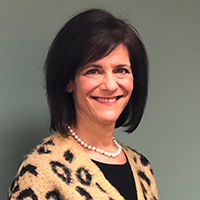 Jennifer M. Morgan, PsyD, provides outpatient clinical neuropsychological services to adults of all ages, including seniors. Morgan is chair of the Health Care Benefits Committee and the Board of Psychology Liaison for the Virginia Academy of Clinical Psychologists, as well as a consultant member to the National Academy of Neuropsychology’s Professional Affairs and Information Committee. In October 2017, she was honored with the Distinguished Service Award by the National Academy of Neuropsychology.
Morgan has also received the Joan Smallwood Service Award, the Distinguished Professional Contributions to the Practice of Clinical Psychology Award, the Hall of Fame Award for significant contributions to Virginia Psychological Association, and the Virginia Academy of Clinical Psychologists Presidential Citation in recognition of exceptional and valuable efforts on behalf of the academy related to patient health care benefits and regulation of the practice.
APA advisor to the AMA/CPT
 Neil Pliskin is a board-certified clinical neuropsychologist and professor of clinical psychiatry and neurology in the University of Illinois College of Medicine. Pliskin serves as director of neuropsychology services at University of Illinois Health and has more than 30 years of experience working as a clinical neuropsychologist and directing clinical neuropsychology training programs.
Pliskin is past president of APA Division 40 (Society for Clinical Neuropsychology) and has served as APA advisor to the American Medical Association’s Current Procedural Terminology Health Care Professionals Advisory Committee since 2009.
Medicare representative
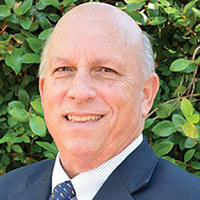 Antonio E. Puente is a professor of psychology at the University of North Carolina Wilmington and maintains a private practice in clinical neuropsychology. His primary teaching activities include brain and behavior, clinical neuropsychology, and history of psychology. Puente is founding director of University of North Carolina Wilmington’s Centro Hispano, and his research focuses on the interface between culture and neuropsychology.
Puente is the founder and codirector of mental health services at the Cape Fear Clinic, a bilingual multidisciplinary health center serving the indigent. He also served as president of the North Carolina Psychological Association, the North Carolina Psychological Foundation, the Hispanic Neuropsychological Association, the National Academy of Neuropsychology, APA Division 40 (Society for Clinical Neuropsychology), and APA.
Puente served as APA’s advisor for 15 years to the AMA’s CPT Health Care Professionals Advisory Committee prior to serving for an additional 8 years as one of 17 members of the AMA CPT Panel. He was cofounder of APA’s Advocacy Coordinating Committee and currently serves as past chair.
Independent practice representative
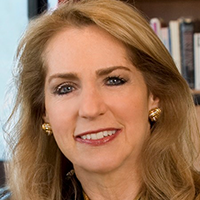 Beth N. Rom-Rymer is a forensic and clinical psychologist with psychopharmacology training and extensive leadership and advocacy experience. Rom-Rymer has a clinical practice in Chicago and a national forensic consulting practice. She has given numerous lectures on clinical and forensic issues (sexual trauma, PTSD, domestic violence, child custody litigation, substance abuse and trauma, sexual harassment in the workplace) throughout the United States and Canada.
Rom-Rymer has held many administrative positions in psychiatric hospitals throughout the Chicago metropolitan region. She has also lectured extensively in the departments of psychiatry, at the University of Chicago, Pritzker School of Medicine, and Northwestern University’s Feinberg School of Medicine, and in the departments of psychology, at the Rosalind Franklin University of Medicine and Science and at the Massachusetts School of Professional Psychology. Rom-Rymer is one of the psychologists who created the field of forensic geriatrics in 2000 and is a national leader in the advocacy for psychologists’ prescriptive authority.
Her numerous awards include Distinguished Illinois Psychologist from the Illinois Psychological Association; Outstanding Service to the Community from the Princeton University Club of Chicago; Outstanding Psychologist of the Year from APA Division 31 (State, Provincial, and Territorial Psychological Association Affairs); APA Presidential Citation for Outstanding Leadership; APA Karl Heiser Award for Legislative Advocacy; Alfred M. Wellner, PhD, Lifetime Achievement Award from the National Register of Health Service Providers; Outstanding Psychologist Award from the Illinois Psychological Association; Social Impact Leaders Award from The Chicago School of Professional Psychology; and Outstanding Leadership Award from AMITA Health Alexian Brothers Behavioral Health Hospital CEO, Clayton Ciha.
Rom-Rymer completed her term as a member of the APA Board of Directors in 2019 and is the immediate past chair of the APA Council Leadership Team. Rom-Rymer is also a member of the board of directors of the National Register of Health Service Psychologists and is the president and CEO of the Illinois Association of Prescribing Psychologists.
RUC CPT representative
 Scott Sperling is board certified in clinical neuropsychology and staff clinical neuropsychologist in the Center for Neurological Restoration at the Cleveland Clinic. He is a clinician and researcher with expertise in Parkinson’s disease and functional neurosurgery for movement disorders. His research examines cognitive decline and neuropsychiatric symptoms in Parkinson’s disease, including the contributions of cholinergic denervation to nonsymptoms, as well as the reliability of in-home teleneuropsychological testing.
Sperling earned his doctorate degree at the Wright Institute and completed his predoctoral internship at the Jesse Brown VA Medical Center. He then completed postdoctoral training in clinical neuropsychology in the Department of Neurology at the University of Virginia, where he worked as an associate professor before moving to Cleveland in 2020.
Sperling is committed to professional service and is an active educator and advocate for inclusivity and justice, students and early career psychologists, the discipline of psychology, and the communities psychologists serve. He has served as chair of APA Division 40 (Society for Clinical Neuropsychology) Education Advisory Committee, cochair of Division 40’s Strategic Planning Committee, and director of Division 40’s Student Leadership Development Program. In response to the Covid-19 pandemic, Sperling cofounded KnowNeuropsychologyopens in new window, an organization that provides open access education to learners across the world. He also had the privilege of serving as chair of APA’s Committee on Early Career Psychologists.
Sperling is highly engaged in state and federal education and health care policy. He is a consultant to the Council of Specialties in Professional Psychology on the development of health service psychology specialties’ taxonomies and a liaison to APA’s Board of Professional Affairs working group charged with recommending an appropriate master’s title and scope of practice in health service psychology. Since moving to Ohio, Sperling has served as the Ohio Psychological Association’s Federal Advocacy Coordinator and chair of their Advocacy Committee.
For his professional service and clinical and research accomplishments, Sperling was awarded the Robert A. and Phyllis Levitt Early Career Award in Neuropsychology.
Hospital practice representative
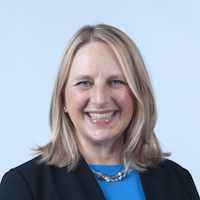 Susan E. Sprich received her BA in psychology from the University of Pennsylvania and her PhD in clinical psychology from The University at Albany, State University of New York. She completed her clinical psychology internship training and postdoctoral training at Massachusetts General Hospital/Harvard Medical School. She has served as the director of psychology training since 2021 and the clinical director of psychology since 2022. She was appointed as the director of postgraduate psychology education for the Massachusetts General Hospital Psychiatry Academy in 2015. She is an assistant professor in psychology at Harvard Medical School.
Sprich is coauthor of 27 chapters and articles on a range of topics including psychosocial treatments for ADHD in adults and adolescents, trichotillomania, and social anxiety. She is a coauthor of Mastering Your Adult ADHD—Therapist Guide and Client Workbook and the first author of Overcoming ADHD in Adolescence—Therapist Guide and Client Workbook, published by Oxford University Press in the Treatments That Work series. She served as a coeditor of the The Massachusetts General Hospital Handbook of Cognitive Behavioral Therapy, published by Springer in 2016, and is currently the lead editor of the second edition of this handbook. She is currently an associate editor of the journal Cognitive and Behavioral Practice.
She teaches and supervises psychology interns and psychiatry residents at Massachusetts General Hospital. She was the recipient of the Emerson Award from Massachusetts General Hospital for her dissertation research and she was awarded a Scholars in Medicine Fellowship through Harvard Medical School. She was given awards for excellence in mentoring by the psychology interns in 2015 and 2023, the Behavioral Medicine Service Award in 2018, and the APA Outstanding Contributions to Continuing Professional Development Award in 2021. Sprich has been involved in research projects focused on ADHD, body dysmorphic disorder, obsessive compulsive disorder, and autism spectrum disorders.
CPT alternate advisor
Julie Wolter is a licensed psychologist in private practice in Rhode Island. She has worked in a variety of settings including community mental health, group private practice, schools, and hospitals. Wolter is passionate about improving the mental health care system by educating and bringing together decision makers (e.g., legislators, insurance companies, government agencies, clinicians, etc.), advocating for innovative solutions to workforce shortages, equitable access to care, and advancing legislation to support expansion of integrated care models and alternative payment models.
Wolter is currently director of professional affairs for the New Hampshire Psychological Association (NHPA), chair of NHPA’s Behavioral Healthcare Advocacy Committee, and president of the NHPA’s educational foundation. In addition, she is APA’s alternate advisor to AMA’s CPT Health Care Professionals Advisory Committee, member of the APA Health Care Financing Advisory Group, the federal advocacy coordinator for the Rhode Island Psychological Association, member-at-large for APA Division 31 (State, Provincial, and Territorial Psychological Associations), member-at-large for APA’s Division 42 (Psychologists in Independent Practice), and the division advocacy partner for APA Division 42.
In 2026, Wolter was awarded the Karl F. Heiser APA Presidential Award for Advocacy, which honors psychologists who volunteer their time to define and advance the profession of psychology through advocacy, legislation, and regulations at the state and federal levels. She was also awarded NHPA’s Member of the Year Award in 2019 and NHPA’s Margaret Riggs Distinguished Contribution Award in 2021, which is given to a New Hampshire psychologist who has demonstrated extraordinary skills in teaching, research, or service.
Psychotherapy representative
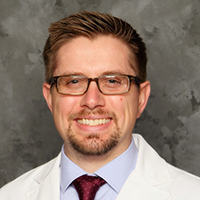 Sean Woodland is a behavioral medicine psychologist for Kaiser Permanente in Sacramento, California. Woodland is an expert in promoting effective use of electronic measure-based outcomes monitoring systems, including Tridiuum and OQ-Analyst. He also works to promote use of standardized psychosocial process and outcome measures in integrated care, including for medical conditions such as chronic pain, insomnia, and diabetes.
Woodland is an active participant in APA division governance and currently serves as a practice representative for Division 49 (Society of Group Psychology and Group Psychotherapy). In this role, he also served as liaison to APA’s Committee for the Advancement of Professional Practice.