 Martinez is a clinical psychologist working to improve systems of care for youth experiencing mental health problems. He is an assistant professor at Brown University and Training Director in the Brown Research on Implementation and Dissemination to Guide Evidence use (BRIDGE) program.
His research sits at the intersection of clinical and implementation sciences, and his research is heavily informed by his clinical experience. His implementation research focuses on implementing and optimizing measurement-based care and other evidence-based practices (EBPs) using practical implementation methods. His clinical research relates to the therapy process—the behaviors and processes in therapy that lead clients to change and improve—particularly in EBPs such as cognitive behavioral therapy.
Martinez is passionate about teaching and clinical work. While not currently practicing, he has experience working with patients across multiple levels of care—from primary care to inpatient psychiatry. He frequently gives invited didactics and trainings on measurement-based care and implementation science.
 Arevalo is a clinical psychologist with extensive experience providing evidence-based treatment in a variety of settings, including community mental health organizations, private practice, university counseling centers, and major health care systems such as the VA and Kaiser Permanente.
He serves as director of clinical strategy at Core Solutions, Inc., where he leads efforts to integrate measurement-based care and clinical best practices into the company’s electronic health records platform. He works closely with product development, engineering, and AI teams to develop innovative, data-driven solutions that enhance clinician workflows, improve decision-making, and optimize patient care. His role also involves defining and implementing metrics to measure high-quality mental health care, ensuring that providers have the tools needed to track patient progress and deliver effective, evidence-based treatment. Additionally, he engages with key stakeholders, ensures regulatory compliance, drives quality assurance initiatives, and develops training programs to help clinicians maximize the benefits of digital health tools.
With a deep commitment to advancing behavioral health through digital innovation and data-driven care, he is at the forefront of efforts to modernize mental health care and improve patient outcomes.
Arevalo earned his PsyD in clinical psychology from Marywood University. He completed his doctoral internship at Hampton VA Medical center and postdoctoral residency at Kaiser Permanente, Redwood City, California.
 Barber is a licensed clinical psychologist and currently serves as associate director of the Measurement-Based Care (MBC) in Mental Health Initiative at the U.S. Department of Veterans Affairs, as well as assistant clinical professor in the department of psychiatry at Yale University School of Medicine. Barber has over 15 years of experience in clinical health psychology, program development, and large-scale implementation of evidence-based practices.
In her current role, she leads national efforts to operationalize MBC as a standard of care across a complex, heterogeneous mental health system, developing training resources, implementation strategies, and educational materials for diverse clinical audiences. She has authored multiple publications on MBC, including the VA’s Collect, Share, Act model, and consults widely on integrating MBC into specialty programs and stepped-care models.
Barber is a founding member of the Yale Measurement-Based Care Collaborative and has served on federal and APA working groups focused on advancing MBC in community and clinical settings.
 Casline (she/her) works in private practice at Groundwork Psychology, PLLC in Chicago, IL. She completed her PhD in clinical psychology from the University of Miami, after completing a predoctoral internship at Children’s Hospital Colorado. Casline completed her postdoctoral fellowship at Northwestern University Feinberg School of Medicine’s Center for Dissemination and Implementation Science and was previously a research assistant professor at Northwestern’s Impact Institute.
Her research seeks to improve community-based behavioral health care services through increased use of standardized assessment and MBC practices. Her work has focused on measurement of MBC fidelity and uses implementation science methods to characterize contextual factors and strategies that influence MBC implementation. She has worked on several National Institute of Mental Health and National Institute of Drug Abuse randomized controlled trials to evaluate implementation of MBC in youth mental health care settings and adult opioid treatment programs.
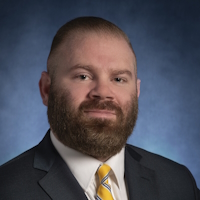 Garofano is a pediatric psychologist and an assistant professor of psychiatry and behavioral sciences at the Johns Hopkins University School of Medicine. He provides clinical services at the Johns Hopkins Hospital in Baltimore, Maryland, where he serves as the attending psychologist for both the pediatric urology clinic and the pediatric hypertension and obesity clinic.
His clinical work primarily focuses on treating patients with complex medical conditions who also present with mental health concerns—with systematic data collection, integration, and feedback serving as the universal vehicle of change across diverse patient populations and treatment goals. He is particularly interested in the visual representation of clinical data to improve communication, enhance efficiency, and optimize patient outcomes.
He earned his PhD in school psychology from the University of South Florida and completed his doctoral internship through the Illinois School of Psychology Consortium. He then pursued a 2-year postdoctoral fellowship in pediatric psychology within the Pediatric Medical Psychology Program at the Johns Hopkins University School of Medicine.
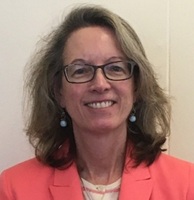 Innes-Gomberg is a deputy director for the Los Angeles County Department of Mental Health with responsibility for quality improvement, quality assurance, outcomes, and training. Over the course of her 33 year career with Los Angeles County, she has assumed leadership roles, overseeing the administration of the Mental Health Services Act (MHSA) from 2009 to 2019, outcome evaluation from 2006 until the present, prevention services, adult services, jail mental health services and served as a district chief for the Long Beach/South Bay areas of Los Angeles County for 6 years.
Innes-Gomberg is a member of the American and California Psychological Associations, as well as their Public Service Divisions (CPA Division 4 and APA Division 18), including service as past-chair of CPA’s Division 4. She was the 2023 Chair of the California Quality Improvement Committee (CalQIC) Conference. She has served as the co-chair of the County Behavioral Health Directors’ Association’s MHSA committee, including a member of its governing board. She is a champion of using data to manage systems and programs.
 Isenberg is a doctoral candidate in clinical psychology at the University of California, Los Angeles. His research seeks to improve the quality of community-based behavioral health care services through increasing standardized monitoring and assessment of therapeutic practices. Specifically, his work has focused on assessing the feasibility of leveraging existing but often underutilized sources of data, such as clinical chart notes, to inform case management, supervision, quality assurance, and large-scale research efforts. He has worked on trials aimed at implementing MBC in community primary care, youth mental health, and school-based mental health settings.
 Jensen-Doss is a professor and the director of clinical training in the department of psychology at the University of Miami. She received her PhD in clinical psychology from the University of California, Los Angeles, after completing her clinical internship at the Charleston Consortium at the Medical University of South Carolina. Her research seeks to characterize and improve youth clinical care, particularly by testing the benefits of employing evidence-based assessment tools and treatments in clinical care settings.
Her work has been funded by the National Institute of Mental Health and the Substance Abuse and Mental Health Services Administration. She has numerous articles published in top-tier journals and is coeditor of a book on diagnostic and behavioral assessment in youth. She served as the chair of APA’s Task Force on Professional Practice Guidelines for Measurement-Based Care.
 McKune presently serves as the chief operating officer for Seven Counties Services located in Louisville, Kentucky. She previously served as the chief operations officer for UofL Health Peace Hospital and associate vice president of population and behavioral health strategy for Passport Health Plan by Molina Healthcare. She has represented the Association of Community Affiliated Plans on the American Psychiatric Association Measure Development Technical Expert Panel.
She is a Kentucky licensed psychologist with a specialty in health psychology. McKune presently serves on the Kentucky Board of Examiners of Psychology and is a past chair. She is a past-president of the Kentucky Psychological Association and the Brain Injury Alliance of Kentucky. She is a former director of mental health for the Kentucky Department of Corrections; Kentucky Psychological Association director of professional affairs; director of psychology, neuropsychology, and brain injury programs at Frazier Rehabilitation Institute; and director of the health psychology emphasis area and adjunct clinical associate professor at Spalding University School of Professional Psychology.
She is a graduate of the University of Louisville and the University of Missouri, Columbia.
 Pavri is a clinical leader driving strategy and innovation at the intersection of clinical services, products, and operations across digital and in-person mental health care settings.
She currently serves as the senior manager of clinical program research and development at AbleTo/Optum Behavioral Care, which operates over 230 standalone clinics across 30 states and provides tailored virtual mental health support nationwide. Previously, she led efforts to advance targeted treatments for depression and anxiety among college students at a technology-powered system of care, developed at University of California, Los Angeles. Throughout her career, she has focused on leveraging digital health solutions to improve clinical outcomes through the implementation of evidence-informed practices and measurement-based care.
She earned her doctorate from the department of clinical psychology at the University of Amsterdam, where her experimental psychopathology research examined underlying mechanisms of psychological disorders. She also holds a clinical psychologist license from California.
 Puspitasari is a board-certified psychologist, clinical professor and director of clinical training at the University of Wisconsin-Milwaukee (UWM) Department of Psychological and Brain Sciences. She is board certified through the American Board of Professional Psychology (ABPP) with a specialty in behavioral and cognitive psychology.
Puspitasari received her BS in sociology, anthropology, and human services at the University of Minnesota-Morris. She then earned her MS in clinical psychology at the University of Wisconsin-Milwaukee, where she also earned her PhD in clinical psychology. Puspitasari completed her predoctoral clinical internship at Alpert Medical School-Brown University in Providence, Rhode Island, and her postdoctoral fellowship in implementation science at Indiana University in Bloomington, Indiana.
Prior to joining UWM, Puspitasari was a regional executive director of clinical services at Rogers Behavioral Health where she oversaw the implementation of evidence-based psychotherapeutic interventions at partial hospitalization and intensive outpatient level of care across several clinics and states. Prior to that, she was an assistant professor of psychology at the Mayo Clinic College of Medicine and Science in Rochester, Minnesota, where she was also senior associate consultant in the department of psychiatry and psychology.
As a scientist practitioner, Puspitasari’s research focuses on the dissemination and implementation of evidence-based psychotherapies (EBPs) in diverse behavioral health settings. She coauthored peer-review articles and presented at conferences on the dissemination and implementation of EBPs. She has provided EBPs training, supervision, and consultation for clinicians both in the United States and internationally.
Puspitasari was the copresident for the Process-Based Therapy Special Interest Group within the Association for Contextual Behavioral Science. She has previously served as a member of the diversity, equity, and inclusion committees at the University of Wisconsin-Milwaukee, Brown University, and Mayo Clinic.
 Scott (she/her/hers) is a clinical psychologist, implementation scientist, assistant professor in the department of medical social sciences, and a core faculty member within the Northwestern University Feinberg School of Medicine Center for Dissemination and Implementation Science. Scott’s program of research is focused on employing methods from implementation science to increase the scale-up of evidence-based practices in community settings.
She has served as PI/MPI of several ongoing studies that seek to implement measurement-based care in community opioid treatment programs across Chicagoland and Pennsylvania. She also has provided implementation science and measurement-based care expertise as a coinvestigator on a range of projects focused on enhancing the quality of care across both health systems and community-based organizations. Finally, Scott serves as the evaluator for the New England Addiction Technology Transfer Center, which provides training and technical assistance to the substance use treatment and recovery workforce in the New England region.
 Tonge is a licensed clinical psychologist and assistant professor in the department of psychology at George Mason University. Tonge’s research focuses on trust, self-disclosure, and interpersonal dynamics in mental health treatment, integrating advanced methodologies such as complex systems modeling, natural language processing, and machine learning to improve assessment and treatment processes. She has led federally funded projects examining how measurement-based care (MBC) data can inform AI/ML models and reduce bias in mental health screening, while also addressing implementation challenges in clinical settings.
 Weisz is the president at Greenspace Health, a technology company that was developed to support the adoption of MBC across the behavioral health and substance use sector. He has participated in supporting more than 500 implementations of MBC across a wide range of provider organizations, client populations, levels of care, and program types. He has also participated in advocacy and education on this topic.
He completed his degree in law (JD) and business (HBA) at Western University and began his career in corporate law at Stikeman Elliott LLP. He then transitioned to the nonprofit sector, helping to launch Building Up, a nonprofit social enterprise that supports people living with barriers to employment. This experience led to a shift in priorities and professional interest. He later cofounded Greenspace Health. He plays an active role as chair and director at Building Up, chair and director at Raising the Roof (a national charity focused on homelessness prevention), and volunteers in support of refugee families.