Building a representative profession is itself an act of advocacy for every community that has ever been told that care was not created or meant for them.


Building a representative profession is itself an act of advocacy for every community that has ever been told that care was not created or meant for them.
As an immigrant and woman of color, advocacy became nonnegotiable — a vessel for survivance. Through this pursuit, I reclaimed my own humanity, created counterpositions to stereotypes, and surrounded myself with a community that affirmed my well-being. My commitment to health equity was further shaped by what I witnessed as a Spanish-English medical interpreter in a rural hospital system: the stigma, disparities in care, lack of representation, and language barriers that left people vulnerable and disenfranchised. I knew then that I did not want decisions about my care, or the care of the communities I love, made without the people they were meant to serve. That is what led me to psychology, and what continues to drive my advocacy today.
What I have learned is that advocacy is not meant to be done in isolation. We are more powerful in community than we are alone, and sometimes the most meaningful contribution you can make is to instill hope in someone else so they can carry the work forward when you need to rest. And rest is not retreat. It is part of the practice. Urgency can feel righteous, but rushing is not always effective, and trying to lead everything often contributes to burnout rather than impact.
I have also learned the importance of focus. You do not have to respond to every injustice at once. Pick two or three causes and commit to them deeply, knowing that everything is interconnected and that your concentrated effort in one area ripples outward into others. Effectiveness does not always look the way you imagined it would. Sometimes it looks like someone else's approach, someone else's voice, someone else's moment. We are bound together by this work, and that is precisely what makes it powerful.
There is an advocate within each of us. For those who feel they have not yet found their entry point, know that advocacy takes many forms: volunteering, donating, working pro bono, contacting your elected officials at the local, state, and federal levels, signing petitions, attending town halls, joining coalitions, mentoring the next generation, or simply amplifying the voices of those who have been historically excluded. You do not need to start from scratch, because there are others who have already been doing this work. Become curious and join them.
And when hesitation arises, I invite you to sit with it. Ask yourself what you have inherited from the system that makes dismantling it feel uncomfortable or out of reach. What is feeding that self-doubt? What is keeping you from starting? Advocacy is showing up, in whatever way you can, for people and causes that need to be elevated.
Aspiring psychologists juggle new jobs, growing families, health challenges, and sociopolitical trauma, all while navigating interlocking systems of oppression. These trainees are community members too, deserving of the same care and equity we advocate for on behalf of others.
Through the CHANGE Grant and #PsychGradWishList, I have worked to address barriers preventing early-career psychologists of color from persisting in the field. Supporting trainees and serving underserved communities are not mutually exclusive. Without the next generation of psychologists who reflect and understand the lived experiences of marginalized and minoritized communities, access to affirming, culturally responsive mental health care will remain incomplete.
The psychology workforce does not represent the population it serves, and that is a crisis. Building a representative profession is itself an act of advocacy for every community that has ever been told that care was not created or meant for them.
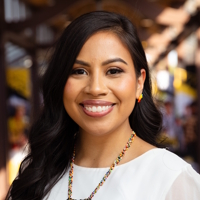
Carrero Pinedo is a bilingual licensed psychologist and a graduate of the APA-accredited Counseling Psychology doctoral program at the University of North Dakota. She has demonstrated sustained, visionary leadership at both national and state levels, serving on multiple boards and advisory committees. She is currently the Chair of the Board for the Advancement of Psychology in the Public Interest (BAPPI) and previously served as the first graduate student appointed to the Advocacy Coordinating Committee (ACC). Carrero Pinedo founded a first-of-its-kind grant initiative–the Cultivating Healing, Advocacy, Nonviolence, Growth, and Equity (CHANGE Grant, Division 56)–within the American Psychological Foundation that supports graduate students and early-career psychologists in advancing projects aimed at eradicating systemic racism, discrimination, and violence. She also developed a grassroots mutual aid initiative, #PsychGradWishList, to support graduate students of color during their transition to internship and postdoctoral training, mobilizing resources and reflecting her deep commitment to mutual aid and community care.
Home State: California
APA Division membership
Join our Psychology Advocacy Network to get the latest news and action alerts from APA Services.
The Advocate Spotlight highlights individuals and organizations whose advocacy makes a difference by advancing important policy issues that impact psychology on Capitol Hill, in federal agencies, in state capitols, and in your communities.