Our personal and professional experiences are the most powerful tools when informing and influencing elected officials.


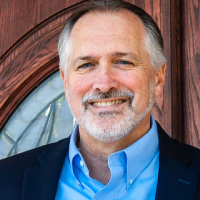
Paul J. Marcille, PhD, is a licensed clinical psychologist with offices in Los Gatos and San Diego, California, where he specializes in the treatment of adolescents and adult men
Our personal and professional experiences are the most powerful tools when informing and influencing elected officials.
I became active in advocacy while living and working in Paris, France. I was a member of Democrats Abroad and helped with voter registration in Paris and throughout France and Europe.
Throughout my 35-year career in academia, as a professor and dean, and with undergraduate and graduate students, I have attempted to promote civic engagement among all of my students. I believe that any educated individual, and particularly those with doctoral degrees, have a civic responsibility to use their education to improve their communities through some form of community engagement and/or activism. The APA Code of Ethics does not require psychologists to engage in advocacy, but I believe advocacy should be part of our broader duty to promote societal welfare, justice, and human rights. Our science and expertise uniquely qualify psychologists to inform and educate the public and elected officials to contribute to the welfare of society and advance public good.
I've learned that psychologists are experts. We know more about human behavior, health and mental health issues, the impact of dwindling public health resources, the impact of technology on young minds, the benefits of preventive care and education, etc., than any elected official. We are experts and should speak up with authority and use our voices to influence elected officials and legislation.
It's so simple! Any of us can be advocates by meeting with a local official, attending a city council or school board meeting, attending your state or congressional member's town hall meetings or coffees, writing an editorial, writing to your member of Congress, write a check, and most importantly, educating oneself about issues and voting.
The biggest challenge is lethargy and the feeling that one can't make a difference. If all 190,000 APA members spoke up and advocated for important issues in their communities, imagine what a difference we could make.
I believe most psychologists are modest and humble. I wish that when I was early in my career, I would have realized the authority that our knowledge, our science, and our skills can inform and influence legislation and elected officials to make better public health and policy decisions.
I live and work in the Silicon Valley, and much of the advocacy work I have done in the last few years in both Sacramento and Washington has revolved around the mental health benefits and harms of emerging technologies, which impact all of us. Good technology can promote equity, inclusion and diversity, while bad technology perpetuates and worsens biases and stereotypes and inequalities. I and my colleagues have attempted to inform and influence elected officials to regulate the tech industries and ensure that their devices and programs enhance diversity, equity and inclusion.
Having worked in both academic and clinical domains, my professional experiences in these areas have allowed me to represent psychology and psychologists who work in research and teaching and in clinical and community settings. Our personal and professional experiences are the most powerful tools when informing and influencing elected officials, and I feel fortunate in having a wide range of experiences to draw upon in my advocacy work.
Paul J. Marcille, PhD, is a licensed clinical psychologist with offices in Los Gatos and San Diego, California, where he specializes in the treatment of adolescents and adult men. He is the former vice president and dean of The American University of Paris and former program director at Palo Alto University. During his 35-year career in academia, he always maintained a clinical practice. Since returning to the U.S. in 2006, he has been the president of the Santa Clara County Psychological Association and the Bay Area Psychological Association, and a board member and president of the California Psychological Association. And since 2020, Marcille has been the federal advocacy coordinator for Northern California, lobbying for psychology and mental health issues in Sacramento and Washington, DC. He recently became a member of APA's Advocacy Coordinating Committee.
Home state: California
APA Division membership:
SPTA membership: California Psychological Association

Join our Psychology Advocacy Network to get the latest news and action alerts from APA Services.
The Advocate Spotlight highlights individuals and organizations whose advocacy makes a difference by advancing important policy issues that impact psychology on Capitol Hill, in federal agencies, in state capitols, and in your communities.