


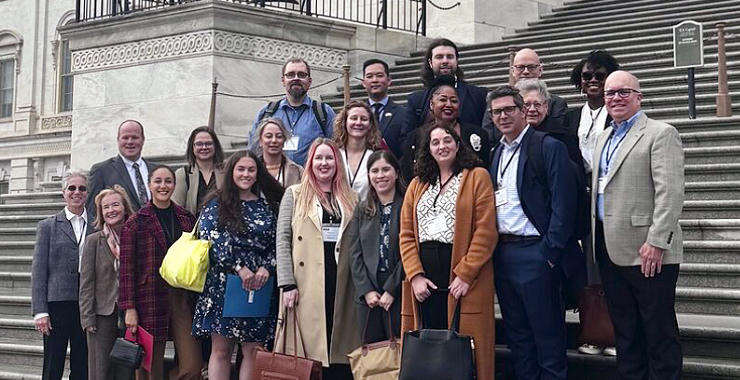
On October 14, APA members of the Committee on Animal Research and Ethics (care) attended the inaugural People for Ethical and Effective Research (peer) Hill Day on Capitol Hill. peer is a new coalition dedicated to mobilizing the power of researchers to protect animal research.
Incoming care chair Erica Glasper, PhD from The Ohio State University, and care member Chip Pickens, PhD, from Kansas State University, joined 20 other researchers to visit congressional offices and convey their powerful stories of leading lifesaving research.
APA advocacy staff has been active in peer and recommended bringing researchers to Capitol Hill for increased impact. Over the last several months, research has been halted including at the National Institutes of Health (NIH), preventing the nation’s top researchers from continuing this critical work.
As our members walked the halls of Congress, they led in-depth conversations, explaining how animal research is necessary to save lives and the importance of maintaining federal funding.
Left to right: Mark Eichelberg, PhD (APS); Charles Pickens, PhD (APA); Zachary Hampton, CPA (Senator Marshall’s Office); Krysta Jones, BA (APA); and Erica Galsper, PhD (APA)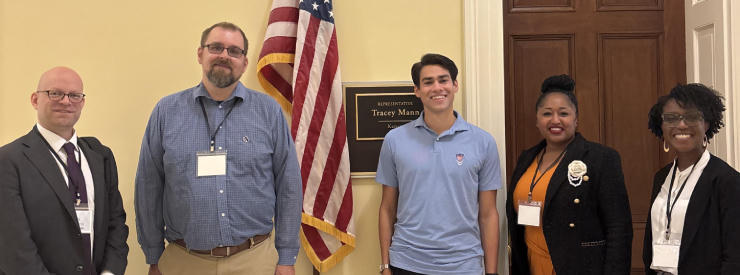
Our advocacy was well timed. In April 2025, NIH announced that it will no longer issue funding opportunities that require the use of animal models. This marks a significant change in how federally funded biomedical research in the United States will be structured.
From now on, all new NIH funding opportunities will include language that allows or encourages the use of non-animal methods, also known as New Approach Methodologies (NAMs). The policy change follows the April 2025 NIH-FDA Workshop on Reducing Animal Testing, where agency leaders discussed strategies for increasing the use of human-focused research approaches.
NIH intends to establish the Office of Research Innovation, Validation and Application (ORIVA) within NIH’s Office of the Director to coordinate NIH-wide efforts to develop, validate and scale the use of nonanimal approaches across the agency’s biomedical research portfolio and serve as a hub for interagency coordination and regulatory translation for public health protection.
APA will continue to advocate for the importance of animal research at the federal and state levels.