


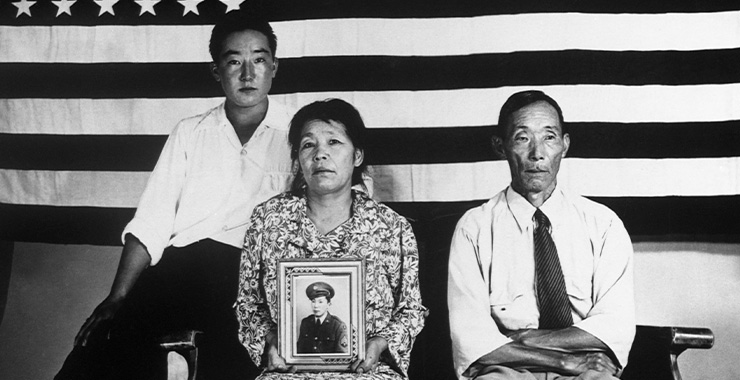
In a proclamation issued on the 80th anniversary of the signingopens in new window of the executive order that authorized the incarceration of 120,000 Japanese Americans, President Biden urged against the sanitization of difficult histories.
Biden’s recorded message came during a series of panels marking the Day of Remembrance for the Japanese American community to mark the signing of Executive Order 9066.
The panels were organized by the National Park Service, Smithsonian Institution, Japanese American Citizens League, Japanese American National Museum, and the Heart Mountain Wyoming Foundation, which is chaired by Shirley Ann Higuchi, JD, APA’s associate chief of professional practice for justice, legal, and state advocacy. “The words we use to describe the historical and present treatment of communities of color and other underserved communities have profound meaning,” Biden said.
“Today, we recognize that euphemistic terms that we have collectively used in the past—such as ‘assembly centers,’ ‘relocation,’ or ‘internment’—do not adequately describe the injustice experienced by some 120,000 people; we recognize the forced removal and mass incarceration of Japanese Americans and others during World War II; and we reaffirm our commitment to ‘nidoto nai yoni,’ which translates to ‘let it not happen again,’” he said.
Higuchi participated in a panel on museums and the nation’s racial reckoningopens in new window, which followed a call by Smithsonian Secretary Lonnie Bunch III to confront the racist underpinnings of much of U.S. society through the work of museums around the country.
“As Americans, we are unified under the Constitution to keep working to perfect our union,” Bunch said in the opening programopens in new window. “We must be able to look into the past with clear eyes.”
Higuchi emphasized the education programs created by the Heart Mountain Wyoming Foundation, especially a series of workshops for educators from around the country to learn about the Japanese American incarceration.
Heart Mountain’s new Mineta-Simpson Institute is a key part of that educational mission. The foundation is in the midst of a campaign to raise $5 million to build the new institute, which is dedicated to the lives and work of Norman Mineta, a former Cabinet secretary and House member, and Alan Simpson, a former three-term senator from Wyoming.
Mineta and Simpson first met as Boy Scouts at a 1943 jamboree at the Heart Mountain camp, where Mineta was incarcerated. Simpson lived in nearby Cody, Wyoming. They have remained friends for the last 79 years and worked together in Congress to pass the 1988 Civil Liberties Act, in which the government formally apologized for the Japanese American incarceration and paid each surviving incarceree $20,000.
Higuchi also presented Bunch with a commendation from the Japanese American Confinement Sites Consortium, an organization of museums and organizations devoted to commemorating the Japanese American incarceration.
Higuchi is the author of Setsuko’s Secret: Heart Mountain and the Legacy of the Japanese American Incarceration, which chronicles the sweeping history of the Japanese American experience from the arrival of the first immigrants from Japan to the future.
For more information, contact APA Advocacy.