


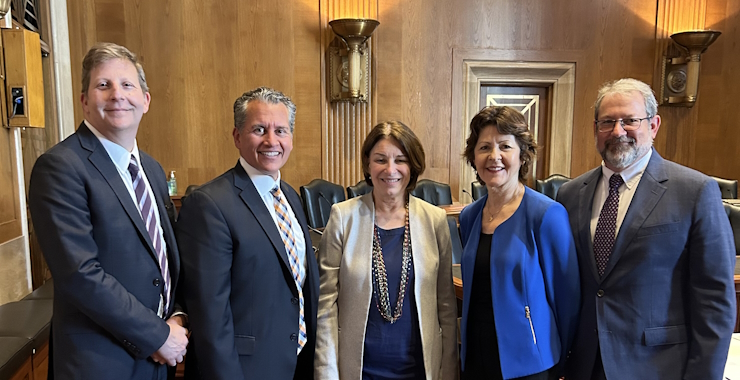
On May 2, 2024, the Friends of the National Institute of Mental Health (NIMH) coalition, which APA cochairs, sponsored a Capitol Hill event, “The Evolution of Mental Health Research: Better Science, More Effective Treatments, and Broader Impacts,” to celebrate the 75th anniversary of NIMH. The audience included senior staff from the National Institutes of Health and NIMH, mental health advocates from the Friends of NIMH coalition, and congressional staff. Senator Amy Klobuchar (D-Minnesota) gave opening remarks. She spoke warmly and knowledgeably about the importance of research, joking with the crowd with a riff on a line from NPR’s Prairie Home Companion that she hails from Minnesota “where the men are strong, the women are beautiful, and all the mental health researchers are above average.” A protégé of the late Senator Paul Wellstone of Minnesota, for whom improving mental health was a central focus, she recalled the long road to the passage of the Mental Health Parity and Addiction Equity Act of 2008, which asserts parity for insurance coverage between physical and mental health. Passage of that legislation took 10 years, and even now, enforcement and implementation of the law are subject to legislative and regulatory battles.
APA Deputy Chief Executive Officer Jim Diaz-Granados, PhD, served as master of ceremonies, introducing Klobuchar and NIMH Director Joshua Gordon, MD, PhD. Gordon spoke about the founding of NIMH after World War II when it was authorized in the Mental Health Act of 1946. Now funded at over $2 billion, NIMH-supported research has played a pivotal role in advancing understanding of the brain, developing groundbreaking treatments and therapies, and improving the quality and availability of evidence-based mental health care.
Gordon led a panel discussion with psychological scientist Michelle Craske, PhD, distinguished professor of psychology, psychiatry, and biobehavioral sciences at the University of California, Los Angeles, and codirector of the UCLA Grand Challenge, who has developed scalable treatment models for underserved populations, including the Screening and Treatment for Anxiety and Depression (STAND) program for screening and treating anxiety and depression. The third panel member was author Robert Kolker, who wrote the best-selling Hidden Valley Road, the story of a midcentury American family that became the focus of research to understand the roots and nature of schizophrenia. The three experts discussed the process of science and the evolution of knowledge over time to improve prevention and treatment.
APA cochairs the Friends of NIMH coalition with the Federation of Associations in Behavioral and Brain Sciences, and organized the event with support from other Friends of NIMH executive committee organizations, including the American Brain Coalition, the American Psychiatric Association, Mental Health America, the National Alliance on Mental Illness, the National Association of State Mental Health Program Directors, and UCLA.
For more information, contact Pat Kobor.