
From left to right: Shannon Beach, PhD; Kim Reynolds, PhD, ABPP; and Royleen Ross, PhD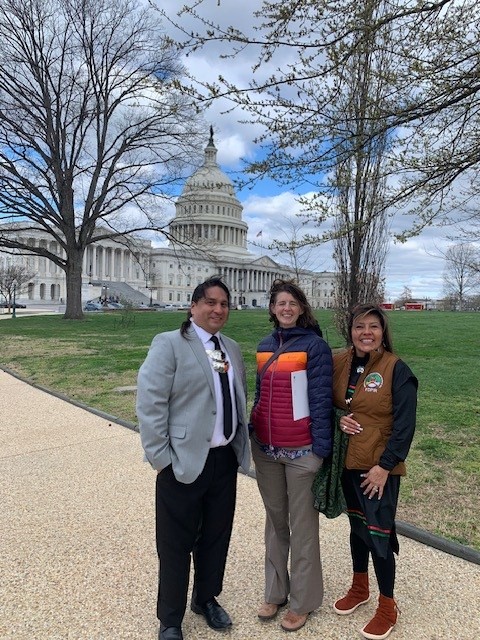
In their meetings with congressional staff, Ross, Beach, and Reynolds raised three issues relating to Native American children’s health:
- supporting the reauthorization of Title IV-B of the Social Security Act, which provides flexible funding to support families and helps Native children remain in Native families.
- support for the Tribal Family Fairness Act (H.R. 2762opens in new window), which also provides flexible child welfare funding for tribes, streamlines reporting requirements, and increases funding for Tribal court improvement grants for tribal family courts.
- support for the Strengthening Tribal Families Act (H.R. 3461opens in new window), which requires the U.S. Department of Health and Human Services to collect data on Native children and support improved collaboration between tribes and states to implement the Indian Child Welfare Act.
In describing her experience, Ross said, “The Hill visits provided an opportunity to convey the importance of preservation and retaining the sanctity of our Native American families, as championed by our ancestors and elders. Within our systems, various aspects of safety of our Native children and cultural ways were also brought to the forefront.”
Reynolds added, “It was such a privilege to help put a spotlight on these important pieces of legislation for multiple congressional offices. I am optimistic that we psychologists can continue to partner with the AAP to elevate the important issue of the health of indigenous youth.”
Beach said, “Working for Indigenous children is one of the most important things those of us who are part of Indigenous communities and who work with the tribes of this country can do…it is difficult to express the magnitude of how I feel when I see the AAP and APA working to help and to empower communities across Indian country for the betterment of our children’s health in all aspects.”
For more information, contact Serena Dávila.