


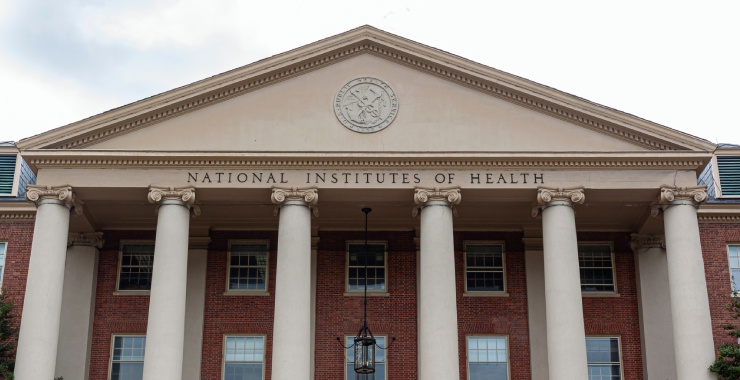
On July 15, APA CEO Arthur C. Evans, Jr., PhD, and APA Advocacy staff met with the new leadership of the National Institute of Mental Health (NIMH) as part of a meeting convened by the executive committee of the Friends of NIMH (FNIMH). APA Senior Director of Congressional and Federal Relations Angela Sharpe serves as FNIMH cochair along with Juliane Baron, executive director of the Federation of Associations in Behavioral & Brain Sciences (FABBS). APA is a member of FABBS.
The meeting served as an opportunity for the executive committee members to introduce themselves to the recently appointed acting NIMH director, Andrea Beckel-Mitchener, PhD, and acting deputy director, Sue Koester, PhD, to discuss the institute’s priorities and budget under the Trump administration. Beckel-Mitchener also serves as deputy director of the BRAIN Initiative, while Koester is deputy director of the Division of Neuroscience and Basic Behavioral Science (DNBBS).
The meeting’s goal was to discuss the institute’s fiscal year 2026 priorities and covered a broad range of topics, including health disparities research, population health initiatives, youth mental health—particularly among Black youth—the institute’s budget and grant funding, staffing changes and terminations, proposed consolidation efforts, and ongoing support for early career researchers.
Of particular concern to APA is the institute’s support of health disparities and population health research, given the Trump administration’s executive orders. Beckel-Mitchener emphasized NIMH’s continued commitment to health disparities research in alignment with its population health goals. The institute remains actively engaged in soliciting research proposals from the scientific community to advance these priorities. Accordingly, she emphasized that researchers should continue to submit grant applications.
Beckel-Mitchener also stressed that NIH Director Jay Bhattacharya, MD, PhD, has made population health research a central priority of his leadership. His research background includes studying population aging and chronic disease and the effects of government policies and programs on health, especially among vulnerable groups. She underscored NIMH’s dedication to safeguarding and supporting early career researchers and trainees. She stressed that NIMH is prioritizing continuity in the institute’s mission despite budget constraints and is modeling fiscal scenarios to respond to possible changes in how research is funded.
For more information, contact Angela L. Sharpe.