


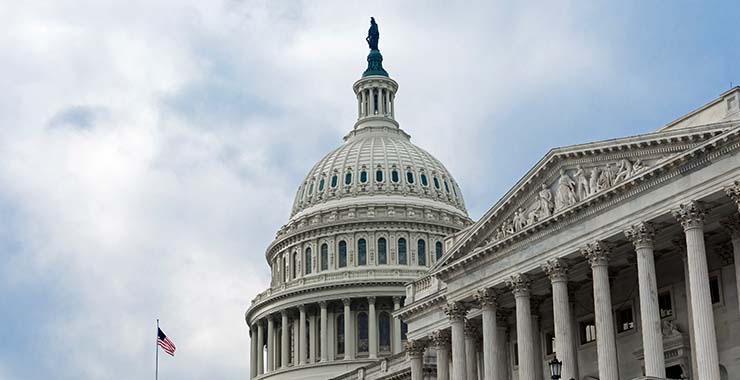
On April 25, 2023, nearly 2,000 psychologists responded to the association’s action alert, urging their congressional representatives to vote against $140 billion in proposed cuts to the overall federal budget. This sum represents a 22% cut in federal nondefense spending, which is being proposed as part of a broader bill in the House of Representatives concerning the debt limit. Further, the bill would cap future discretionary spending, allowing growth by only 1% each year until 2033.
Nevertheless, via a party-line vote of 217–215opens in new window, the House-led Republicans passed the Limit, Save, Grow Act of 2023 (H.R. 2811opens in new window) on April 26, 2023. The bill links raising the debt limit, the amount of debt the federal government can have outstanding, to the resources that would be available for annual appropriations for discretionary programs. If enacted, the measure would suspend the debt limit until March 31, 2024, or until the debt reaches $1.5 trillion. The bill also would cut federal spending to no more than fiscal year (FY) 2022 levels, a condition required by some House Republicans to secure their vote to lift the debt ceiling. The U.S. Department of Treasury has indicated that the nation would begin to default on its payments as early as June 1, 2023, unless Congress acts. The Democrat-controlled Senate is not planning to take up the legislation, and President Biden has indicated that he would veto the bill should it reach his desk.
The measure would nullify the progress made to address the nation’s mental health crisis, and severely undermine the population health approach that psychologists know is critical to addressing the well-being of our communities. This reduction in spending would result in:
- Cutting off access for 900,000 individuals calling the 988 Suicide Prevention Lifeline, operated by the Substance Abuse and Mental Health Services Administration.
- 5,000 fewer grants and a $10.2 billion cut for the National Institutes of Health, threatening research, including critical social and behavioral science research, and a $2.17 billion cut for National Science Foundation research and education grants, eliminating support for 66,000 scientists, technicians, teachers, and students. Research cannot exist in erratic funding cycles.
- 29,000 people currently seeking treatment for substance use disorders through the State Opioid Response grant program would lose access to treatment programs.
- More than $2 billion in cuts to critical education programs, including those that fund low-income schools, support students with disabilities, provide school-based mental health services, and increase access to higher education.
- 30 million fewer outpatient visits, the elimination of 81,000 jobs across the Veterans Health Administration, and millions of dollars in cuts to valuable medical research for programs outside of the four Veterans Affairs (VA) medical care accounts. It would reduce thousands of VA staff and limit research efforts designed to address the impact of traumatic brain injury and suicide prevention.
- A reduction of 4 million outpatient visits, and over 200,000 mental health visits within the Indian Health Service.
On May 15, 2023, APA Services also joined more than 750 organizations in support of the Coalition for Health Funding (CHF), the Committee for Education Funding (CEF), the Campaign to Invest in America's Workforce, and the Coalition on Human Needs efforts to generate a stakeholder sign-on letter calling for support for nondefense discretionary programs (PDF, 141KB)opens in new window. Advocacy Office staff sit on the boards of CHF and CEF. In March, APA Services joined 471 organizations in a letter to the leadership of the Senate appropriations committee (PDF, 175KB)opens in new window encouraging them to increase the FY24 allocation for the Labor, Health and Human Services, Education, and Related Agencies Subcommittee to a level that ensures robust and sustained investments so that these programs can meet vital needs.
For more information, contact Angela L. Sharpe.