


skip to main content
Research funding

Opposing radical reorganization of the National Institutes of Health

The fiscal year 2025 appropriations bill, which provides funding for the National Institutes of Health, proposes an unprecedented reorganization of the agency

APA Style leaf logo Cite This Article in APA Style
American Psychological Association. (2024, July 8). Opposing radical reorganization of the National Institutes of Health. https://www.apaservices.org/advocacy/news/opposing-nih-radical-reorganization

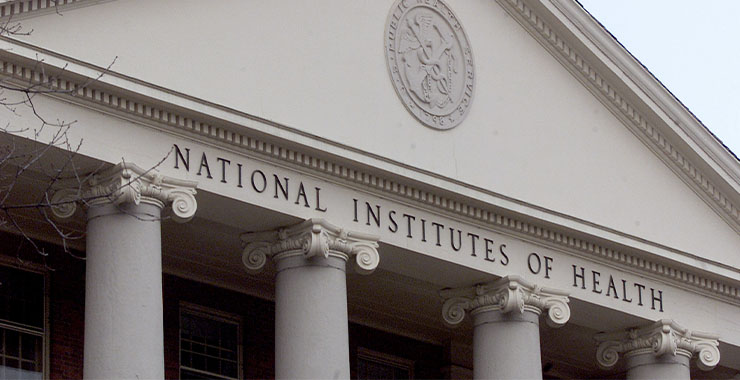
Facade of NIH building

APA Services joined 223 NIH stakeholders in a letter (PDF, 113KB)opens in new window to House Appropriations Chair Tom Cole (R–Oklahoma) and Ranking Member Rosa DeLauro (D–Connecticut) expressing alarm that the Fiscal Year 2025 Labor, Health and Human Services (Labor-HHS) appropriations bill includes a proposal to restructure the National Institutes of Health (NIH). “Authorizing an entirely new structure for the NIH in an appropriations bill without hearings, data, and review of the impact on biomedical research is a violation of process and procedures,” the letter states. “This massive consolidation of NIH’s Institutes and Centers amounts to Congress dictating science; it would affect all research conducted at the NIH and be detrimental to the research enterprise. A policy of this magnitude—and one affecting one of our nation’s preeminent research institutions—should not be included in an appropriations bill.”

On June 26, 2024, the House of Representatives Appropriations Labor-HHS subcommittee released its draft fiscal year (FY) 2025 appropriations bill, which proposes drastic funding cuts to many mental health and education agencies and programs that APA Services supports. The bill also includes provisions that would radically reorganize NIH and collapse the 27 institutes and centers (ICs) into 15 institutes without a hearing or any input from the NIH stakeholder community. The provision is part of a proposal released by House Energy and Commerce Committee Chair Cathy McMorris Rodgers (R-Washington). More than 1,200 APA members responded to an action alert to contact their congressional members and urge them to oppose the bill.

House framework calls for radical reorganization of NIH

The last NIH authorization for appropriations was enacted under the 21st Century Cures Act (P.L. 114-255) which expired in FY 2020. The last comprehensive reauthorization occurred in the NIH Reform Act of 2006. In early June, the Energy & Commerce Committee released its proposal, Reforming the National Institutes of Health Framework for Discussion (PDF, 3.5MB)opens in new window. The committee is seeking public input by August 16, 2024. The committee has jurisdiction over NIH, and McMorris Rodgers, who is retiring at the end of the 118th Congress, aimed to begin a discussion surrounding an NIH reauthorization bill before retiring. Representative Robert Aderholt (R–Alabama), chair of the House Appropriations Labor-HHS Subcommittee, has endorsed the plan. The subcommittee has jurisdiction over NIH funding, hence the inclusion of the structural recommendations for NIH from the proposal in the Labor-HHS appropriations bill.

According to the executive summary from Rodgers and Aderholt (PDF, 202KB)opens in new window, “[t]he American people’s trust in the National Institute of Health (NIH) has been broken. Over the past several years, we have witnessed countless missteps throughout the covid-19 pandemic, along with numerous investigations that have turned up everything from systematic sexual harassment to serious lapses in oversight related to risky research. These matters were made worse by a culture resistant to transparency and accountability to Congress and the public.”

Neither the draft appropriations bill nor the Energy and Commerce proposal address the criteria for the proposed revised structure (PDF, 175KB)opens in new window. The provisions in the respective documents would maintain the National Institute of Mental Health as an independent institute, and it would combine the National Institute on Child Health and Human Development and the National Institute on Deafness and Other Communication Disorders to a new entity, the National Institute for Disability Related Research. The proposal would rename the National Institute on Aging to the National Institute on Dementia. Further, it would combine five institutes into a National Institute on Health Sciences Research: the National Institute on Minority Health and Health Disparities, National Institute of Environmental Health Sciences, National Center for Complementary and Integrative Health, National Institute on Nursing Research, and John E. Fogarty International Center.

The reorganization framework also includes additional recommendations that would:

  • establish a congressionally mandated commission to lead a comprehensive review of NIH. The demise of the Scientific Management Review Board (SMRB), created in 2006 with the “directive to formally and publicly review NIH’s organizational structure every seven years”, is noted. The SMRB’s last report was in 2015
  • establish term limits for IC directors to 5-year terms with the ability to serve for 10 years
  • require biennial reports to Congress “outlining how the individual IC is utilizing a life stage approach throughout its activities, grant funding decisions and research portfolio and priorities, including appropriately considering distinctions and factors related to sex and age, as well as rare diseases within each center’s purview.”
  • address misconduct: There is concern regarding “the adequacy of the NIH’s response to allegation of misconduct, including sexual harassment complaints,” both extramural and intramural
  • institute additional disclosure reporting requirements for donors and partners and activities supported by the Foundation for NIH
  • restore direct funding by eliminating the PHS Evaluation set-aside/evaluation tap. The Agency for Healthcare Research Quality’s discretionary budget used to come from this tap. These funds have been used to provide money toward the crisis at the southern border
  • reexamine indirect costs by considering alternative mechanisms to limit indirect, or Facilities and Administrative  costs, such as tying the indirect cost rate to a specific percentage of the total grant award
  • direct grants and awards primarily only to primary investigators that do not have more than three ongoing concurrent NIH engagements

APA Services is drafting a response to the Committee by their August 16 deadline. Input is welcomeopens in new window.

Senate proposal: NIH in the 21st Century: Ensuring Transparency and American Biomedical Leadership

NIH reauthorization is being considered in the Senate as well. In October 2023, APA Services responded to ranking member of the Senate Health, Education, Labor and Pensions Committee Senator Bill Cassidy’s (R–Louisiana) request for information regarding policies that will advance goals “to modernize the agency so it is more transparent, nimble, and forward-thinking” related to NIH reauthorization.

Cassidy released a white paper, NIH in the 21st Century: Ensuring Transparency and American Biomedical Leadership (PDF, 826KB)opens in new window, in May 2024. The paper emphasizes the importance of NIH maintaining a balanced portfolio and lays out proposals to address how the U.S. “can sustain its advantage in biomedical research to ensure Americans receive the most innovative treatments as quickly as possible.” Among the paper’s suggestions: streamline “peer review of research and addressing challenges in recruiting and maintaining our biomedical workforce.” Most important, the white paper also emphasizes the need for “robust collaboration” between NIH, public health and health care institutions, and the private sector in identifying how NIH policies can be adapted to most effectively support potentially transformative research.”

APA Services will continue to engage with its members and Congress to protect the sustainability of NIH.

For more information, contact Angela L. Sharpe.

You may also like