



From left to right: Donna Korol, PhD; Brett Frye, PhD; Erica Glasper, PhD; Melvin Rouse, PhD; Alex Ohpir, PhD; and Jeff Grimm, PhD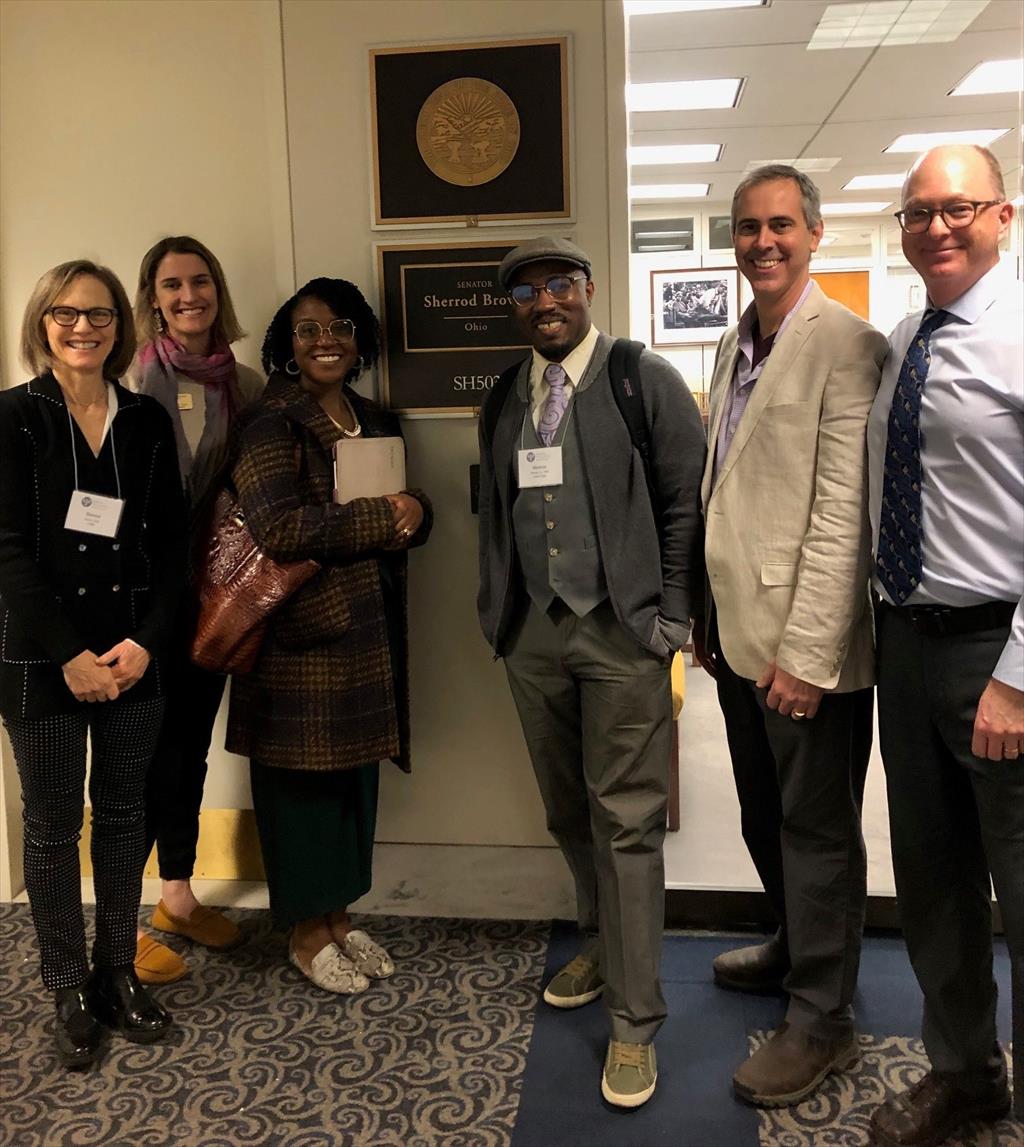
In their meetings, the CARE members described the research they conduct with various animal models (including rats, birds, prairie voles, and primates) and the extent to which they work to support the animals’ welfare. They pointed out that they can only obtain valid results if the animals are well cared for.
They also spoke to Hill staff about the issue of alternatives to animal research. Some congressional offices are pushing research funding agencies to support research using only alternative methods rather than using live animals. Alternatives such as tissue-on-a-chip could potentially substitute for animals in some, but not all, studies, they cannot currently be used to answer all the questions that scientists are posing, and many alternative methods have not been validated sufficiently to be of use yet. Some toxicology studies may be possible with alternative methods, but research on how animals interact in social groups over time cannot be easily modeled with alternative methods.
The National Institutes of Health is establishing a new Common Fund initiativeopens in new window on Complementary and Alternative Methodologies, but that research is intended to complement and extend research with animals, rather than to replace it.
Members of the Committee on Animal Research and Ethics are: Melvin Rouse, PhD, CARE chair, of the University of Puget Sound; Alex Ophir, PhD, of Cornell University; Jeff Grimm, PhD, of Western Washington University; Brett Frye, PhD, of Emory & Henry College; Erica Glasper, PhD, of the Ohio State University; and Donna Korol, PhD, of Syracuse University.
For more information, contact Pat Kobor.