


skip to main content
Research funding

Advocating to protect animal research

APA members meet with congressional staff to highlight the importance of and address misconceptions surrounding animal research

APA Style leaf logo Cite This Article in APA Style
American Psychological Association. (2025, June 4). Advocating to protect animal research. https://www.apaservices.org/advocacy/news/protect-animal-research

APA’s Committee on Animal Research and Ethics (care) has been meeting with members of Congress to advocate for animal research and addressing the misinformation surrounding it. Accompanied by APA Advocacy staff, the care members have been meeting in person and virtually with staff from 11 Senate offices and two House offices.

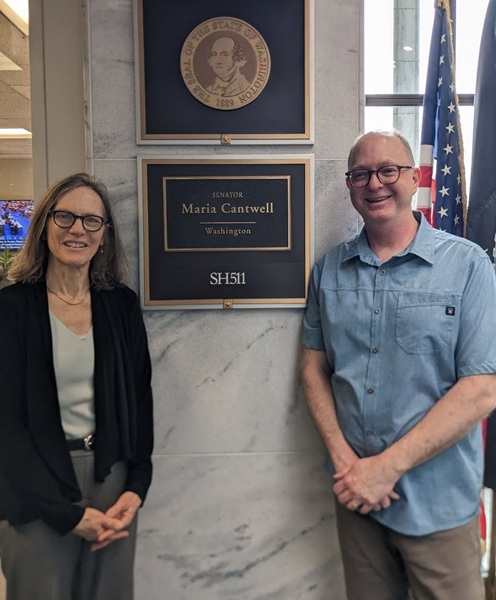
Donna Korol, PhD, and Jeff Grimm, PhD, standing outside the office of Senator Maria Cantwell (D-Washington).

Donna Korol, PhD, and Jeff Grimm, PhD, outside the office Senator Maria Cantwell (D-Washington).
In their meetings, the care members described the research they conduct with various animal models (including rats, birds, prairie voles, and primates) and explained why animal research is still so important. Advancements in medical science that lead to new medicines, vaccines, and therapies do not happen without ethical research, including necessary animal studies. While alternatives to animal research could potentially substitute for animals in some, but not all, studies, they cannot currently be used to answer all the questions that scientists are posing. 


Additionally, new treatments and cures require rigorous study before they can be considered safe, and many alternative methods for conducting this critical research have not yet been validated sufficiently to be of use. For example, some toxicology studies may be possible with alternative methods, but research on how animals interact in social groups over time cannot be easily modeled with alternative methods. The care members also explained the extent to which they work to support the animals’ welfare and emphasized that they can only obtain valid results if the animals are well cared for.

On April 29, the National Institutes of Health (NIH) announced that it is launching a new initiative focused on advancing human-based research technologies while reducing the use of animals. To achieve this, the agency plans to establish a new office within the Office of the Director called the Office of Research Innovation, Validation, and Application. In light of the proposed cuts to NIH, it is unclear how this office would be funded.

Brett Frye, PhD, standing outside the office of Representative Morgan Griffith (R–Virginia).
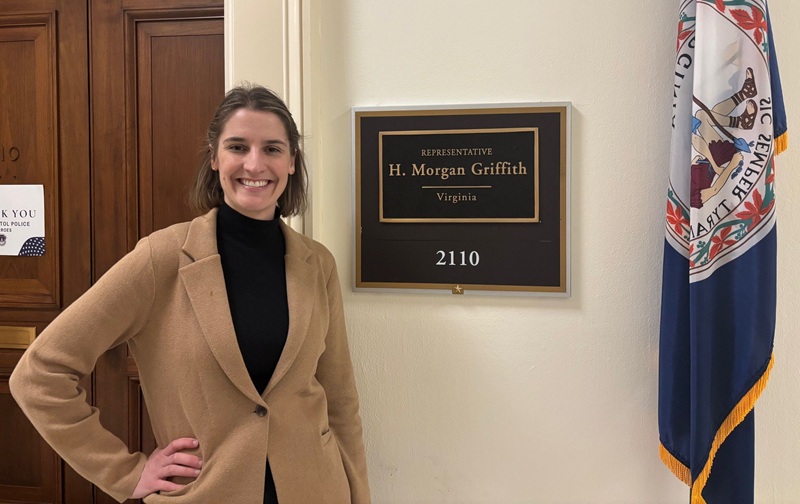
Brett Frye, PhD, standing outside the office of Representative Morgan Griffith (R–Virginia).

APA Services collaborates with other research organizations on animal research advocacy through the newly launched coalition People for Effective and Ethical Research led by Americans for Medical Progress. The association also recently joined the Federation of American Societies for Experimental Biology and 30 state, regional, and national organizations in a letter opposing the Save Pets, Animals, and Research Ethics (SPARE) Act (PDF, 179KB)opens in new window (H.R. 1802opens in new window). Implementation of the spare Act would halt critical, lifesaving research happening at American institutions, push research infrastructure overseas to countries with fewer animal protections and restrict American innovation in the biological and biomedical fields.


Members of care include Brett Frye, PhD, Emory & Henry College (chair); Erica Glasper, PhD, the Ohio State University; Jeff Grimm, PhD, Western Washington University; Donna Korol, PhD, Syracuse University; Cassandra Sheridan, Indiana University Bloomington; Charles Pickens, PhD, Kansas State University; and Katherine Seraphin, PhD, the University of Texas El Paso.

For more information, contact Krysta Jones.

You may also like