


APA President Wendi 
Williams, PhD
Speaking to an audience of Black women, all of whom serve as leaders in government relations and advocacy, Williams grounded the discussion in psychological research regarding Black women and work, refusal, and recovery. She addressed the "Strong Black Woman" syndrome, where Black women hide pain to avoid showing vulnerability, resulting in severe anxiety. Williams highlighted how applying psychological science to workplace dynamics can help Black women reclaim wellness, practice strategic refusal, and heal from occupational stress.
Earlier this year, under the leadership of CCBWG cofounder and cochair Congresswoman Bonnie Watson Coleman (New Jersey-12), the caucus released “Unweathered”—A Black Women and Girls’ Guide to Wellness and Resilience (PDF, 4MB)opens in new window. The 55-page report explains how mental health issues may show up differently for Black women and girls, provides options for finding support, and gives recommendations for protecting and advocating for one’s own wellness. Beyond individual strategies, the guide details policy solutions such as expanding workforce diversity, supporting justice-impacted individuals, and centering community lived experiences.
Jones, K. (2026, October 16). Centering psychological science to address Black women and work with Congressional Caucus on Black Women and Girls. https://www.apaservices.org/advocacy/news/psychological-science-congressional-black-women

Election 2026 APA Services Voter Guide
Many issues affecting psychologists and their communities are on the ballot this November, and your engagement in the upcoming election can impact the future of your work and the well-being of society. Use the 2026 APA Services Voter Guide to learn how you can engage in the upcoming election and educate candidates and communities about the importance of psychology and the issues that matter to you.
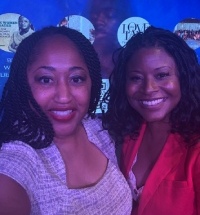
Krysta Jones (left) and
Wendi Williams (right)
Several APA members and APA advocacy staff contributed directly to the resource guide. The guide was created by the Black Girls Mental Health subcommittee of the Black Mental Health Braintrust and led by Representatives Bonnie Watson Coleman (New Jersey-12), Yvette Clarke (New York-09), and Robin Kelly (Illinois-02).
The subcommittee works consistently toward a world where Black women and girls are valued, portrayed positively, and seen as central to our collective global story.
APA will continue advocating for the importance of mental health equity to ensure that every individual receives the support and recognition they deserve.