skip to main content

Improving sleep via technology

New research on accessible online interventions for treating insomnia and sleep.

APA Style leaf logo Cite This Article in APA Style
Marzalik, J. S. (2022, July 22). Improving sleep via technology. https://www.apaservices.org/practice/ce/expert/improving-sleep

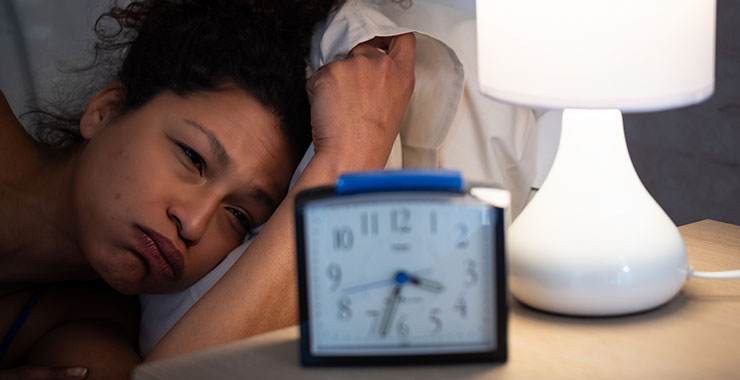
Woman unable to sleep

The covid-19 pandemic has brought on significant stress worldwide and this stress may have impacted sleep quality. A survey of adults across 79 countries found that of the 991 respondents, about 50% reported experiencing insomnia during the pandemic (Petrov et al., 2021). New research suggests that having an adequate amount of good quality sleep could help prevent severe covid-19 illness.

In this installment of “Research Roundup,” we explore the latest research on using technology to tailor evidence-based sleep interventions to specific populations. The first study examines a web-based intervention to improve sleep in Black women and the second looks at pregnant individuals who are experiencing prenatal insomnia. The third study is a review that examines the effects of virtual group mindfulness training for improving sleep quality and reducing stress during the pandemic.

Note: In addition to reviewing the research summaries, psychologists are encouraged to further explore the literature to determine what may be useful to them in practice, particularly as it relates to patients’ values, culture, and preferences.

Culturally tailored internet-delivered CBT for insomnia in Black women

Zhou, E. S., Ritterband, L. M., Bethea, T. N., Robles, Y. P., Heeren, T. C., & Rosenberg, L. (2022). Effect of culturally tailored, internet-delivered cognitive behavioral therapy for insomnia in Black women: A randomized clinical trialopens in new window. JAMA Psychiatry, 79(6), 538–549.

Having enough hours and a good quality of sleep is vital for physical, psychological, and emotional well-being. However, there are significant racial disparities in the amount and quality of sleep one reports, as Black individuals were more likely to report sleep problems than their White counterparts. The study authors examined the efficacy as well as level of engagement of an internet-delivered cognitive behavioral therapy intervention tailored for Black women who are experiencing insomnia.

Of the 1,010 Black women who expressed interest in participating in the study, 333 were eligible to participate. The participants were randomly assigned to receive either the original Sleep Healthy Using the Internet (shuti) intervention; the shuti intervention tailored for Black women (shuti-BWHS, developed based on feedback from participants of the Black Women’s Health Study); or a link to a website containing educational materials about improving sleep. Both the shuti and shuti-BWHS utilize the principles of face-to-face cognitive behavior therapy over the internet, which involves educating individuals about sleep hygiene, completing daily sleep diaries outside of sessions, and reframing thoughts about sleep within six 45–60-minute weekly sessions for 6 to 9 weeks. Participants were also instructed on how to address insomnia symptoms if they were to reappear.

Participants who were assigned to the shuti and shuti-BWHS reported significant improvements in their sleep hygiene versus those who received the link to educational materials, and improvements remained six months after the intervention study. The researchers found that there was more engagement within the shuti intervention tailored for Black women with insomnia. The increased engagement was attributed to the greater representation of Black individuals with insomnia in the online exercises. This finding shows that interventions can be tailored to meet the patients’ values, culture, and preferences and lead to good outcomes. Tailored interventions can improve access to services and engagement with underserved populations.


Addressing insomnia during pregnancy through digital CBT

Felder, J. N., Epel, E. S., Neuhaus, J., Krystal, A. D., & Prather, A. A. (2022). Randomized controlled trial of digital cognitive behavior therapy for prenatal insomnia symptoms: Effects on postpartum insomnia and mental healthopens in new window. Sleep, 45(2), Article zsab280.

Lack of sleep during pregnancy increases the risk of developing postpartum depression as well as developmental and psychological complications in the newborn. The researchers were interested in examining whether there were improvements in postpartum mental health three months and six months after individuals participated in six weekly sessions of a digital cognitive behavior therapy-Internet (dCBT-I) intervention for treating insomnia. The dCBT-I application, “Sleepioopens in new window,” consisted of various online exercises that apply the principles of CBT in educating the individual about sleep hygiene as well as different relaxation strategies for addressing maladaptive thinking toward sleep. 

In the initial study, 208 pregnant individuals with insomnia were randomized to receive either a link to the “Sleepio” dCBT-I application or treatment as usual (which varied ranging from medication to psychotherapy). Of the 208 pregnant individuals, 172 of them completed 3-month and 6-month follow-up assessments of their sleep, mental health, and whether they used other modalities outside of the intervention (e.g., over-the-counter sleep aids, etc.). The researchers also examined whether the dCBT-I intervention could aid in the prevention of developing postpartum depression and anxiety, based on the follow-ups of pregnant individuals who did not have a history of mental health concerns.

Individuals who were randomized into the dCBT-I group reported significant reduction in insomnia symptoms at 6-months postpartum more than those who were assigned in the control group. At 3-month and 6-month postpartum follow-up assessments, individuals in the intervention group reported significant improvement in their mental health, and of the individuals who did not have a history of depression prior to the study the dCBT-I intervention served as a preventative aid toward developing postpartum depression. While there was no significant difference in the quality of sleep between the intervention and control groups, digital CBT could serve as an aid to improving sleep by reducing stress about sleep.

Group mindfulness training for reducing stress via videoconferencing

Lim, J., Leow, Z., Ong, J., Pang, L.-S., & Lim, E. (2021). Effects of web-based group mindfulness training on stress and sleep quality in Singapore during the covid-19 pandemic: Retrospective equivalence analysisopens in new window. JMIR Mental Health, 8(3), Article e21757.

Previous research has shown the benefits of mindfulness meditation in reducing stress and improving sleep. However, there is now new research on whether group mindfulness training delivered via videoconferencing is as effective as in-person training. The study authors looked to examine whether there were differences in stress and sleep quality in participants who participated in a group mindfulness training in-person prepandemic, in-person at the initial stages of the pandemic, and via videoconferencing during the initial lockdown period. The authors noted that randomization a priori was not possible as this was a retrospective analysis.

38 individuals residing in Singapore participated in a group mindfulness training intervention via videoconference during lockdown, while 36 participated in the mindfulness training sessions in-person during the early part of the pandemic and 86 participated in-person before the pandemic. The sessions varied by intensity (i.e., foundational, intermediate, and mindfulness-based stress reduction) and participants were taught various meditative skills to remain in the present moment and were asked to use these skills outside of session. Participants then completed self-reported measures of their sleep quality and perceived stress. After comparing the three groups’ sleep quality and perceived measures, the authors found that the online group mindfulness training intervention showed the same benefits as the in-person format for reducing stress only. The authors did not find any evidence of improvement in sleep quality for the participants that completed the training in-person right when the pandemic started and via videoconferencing during lockdown. They noted that the lack of evidence of improvement in sleep quality may be due to other extraneous factors that occurred once the pandemic started (i.e., daily routines upended) as well as participants’ focus being solely on reducing stress.

While the online mindfulness training via videoconferencing did not show improvement in sleep quality, participants who completed the training via videoconferencing received the same benefits for stress reduction as those who completed the training in-person, which in turn could improve sleep.

Clinical implications

Receiving adequate amounts of quality sleep is critical to maintaining good health and well-being. Altogether, the three studies illustrate ways technology can be used to improve sleep and reduce stress, ranging from applying CBT principles via a mobile application to attending group mindfulness trainings via videoconference. The studies also show the benefits of tailoring interventions based on the individual’s characteristics, values, and preferences. Given that there are not enough professionals to provide individual interventions for sleep disturbances, online applications and groups may be important adjuncts to traditional care, and psychologists may wish to consider recommending these options to patients.

Reference

Petrov, M. E., Pituch, K. A., Kasraeian, K., Jiao, N., Mattingly, J., Hasanaj, K., Youngstedt, S. D., Buman, M. P., & Epstein, D. R. (2021). Impact of the covid-19 pandemic on change in sleep patterns in an exploratory, cross-sectional online sample of 79 countries. Sleep Health, 7(4), 451–458. https://doi.org/10.1016/j.sleh.2021.05.007opens in new window

Further reading

Abrams, Z. (2021, June 1), Growing concerns about sleep. Monitor on Psychology, 52(4), 30. https://www.apa.org/monitor/2021/06/news-concerns-sleep

American Psychological Association. (2014). More sleep would make us happier, healthier, and safer. https://www.apa.org/topics/sleep/deprivation-consequences

American Psychological Association. (2020). Why sleep is important. https://www.apa.org/topics/sleep/why

Haight, R. S., & Saskin, P. (2014). Getting a good night’s sleep: How psychologists help with insomnia. American Psychological Association. https://www.apa.org/topics/sleep/disorders

Luna, K. (Host). (2020, March 1). Psychologically sound tips for better sleep (No. 102) [Audio podcast episode]. In Speaking of psychology. American Psychological Association. https://www.apa.org/news/podcasts/speaking-of-psychology/better-sleep-tips

Mills, K. (Host). (2021, June 2). covid-19, insomnia, and the importance of sleep, with Jennifer Martin, PhD (No. 144) [Audio podcast episode]. In Speaking of psychology. American Psychological Association. https://www.apa.org/news/podcasts/speaking-of-psychology/sleep-patterns

Suni, E. (2022, March 11). Sleep guidelines during the covid-19 pandemic. Retrieved June 21, 2022, from https://www.sleepfoundation.org/sleep-guidelines-covid-19-isolationopens in new window