Patient encounter: A psychologist is conducting an initial psychiatric diagnostic evaluation with a patient who presents with symptoms of depression. During the diagnostic interview the patient mentions how “life struggles” are a barrier to her happiness and success. So, the psychologist wants to better understand “life struggles” and the broader context of her health.
Assessment process: At the time of the diagnostic interview, the psychologist uses the Protocol for Responding to and Assessing Patients’ Assets, Risks, and Experiences (PRAPARE) Tool to explore social risk factors. The assessment covers areas such as housing stability, access to nutritious food, transportation, and social support.
Identifying social determinants: The psychologist discovers that Sarah experiences unsafe transportation and food insecurity. She relies on public transportation, which affects her ability to attend therapy sessions consistently. Sarah also lacks a strong support system, exacerbating her feelings of isolation.
Tailoring treatment: Armed with this information, the psychologist adjusts Sarah’s treatment plan. He refers her to community resources for housing assistance and food programs. The psychologist collaborates with a social worker to address transportation challenges. Sarah is encouraged to join support groups or connect with local organizations. The psychologist spends 10 minutes discussing the results of the SDOH assessment and referrals.
Follow-up: The psychologist makes a plan to follow-up with the patient on the referrals and to reassess Sarah’s social needs in 6 months.
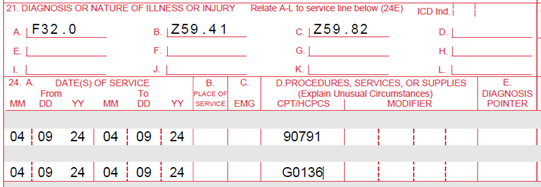
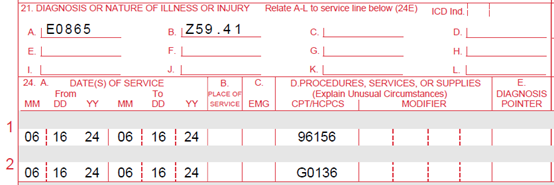
Billing: Report CPT® code 90791 for the psychiatric diagnostic interview and G0136 indicating the administration of a standardized, evidence based SDOH assessment. Report the patient’s primary mental health diagnosis as the primary diagnosis. Report the correct Z codes as secondary diagnoses for each social risk factor: Z59.41, specifically represents food insecurity; Z59.82, represents transportation insecurity.