


skip to main content

Research roundup: Working with Indigenous patients

The following research highlights considerations for practitioners when providing mental health care services in the Indigenous population.

APA Style leaf logo Cite This Article in APA Style
Rose, S. A., & Bufka, L. F. (2023, May 5). Research roundup: Working with Indigenous patients. https://www.apaservices.org/practice/ce/expert/indigenous-patients

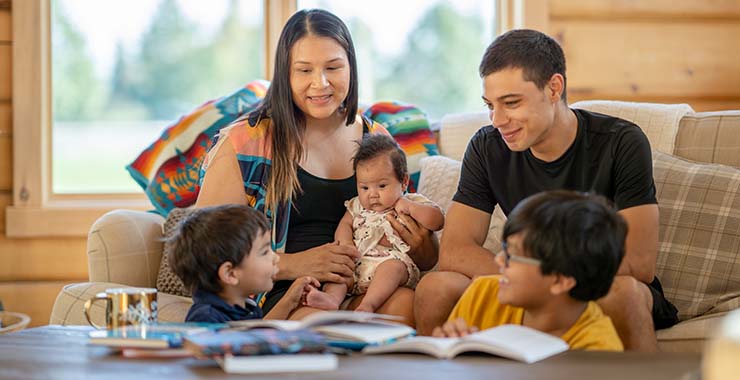
Native American family lounging in living room

Between 4–7 million Indigenous people* live in the United States with less than one quarter living in American Indian areas or Alaska Native villages. For states, California has the largest population of Indigenous people, and New York City has the largest population of Indigenous people among metropolitan areas (IWGIA, 2022). Indigenous people consistently rank as one of the highest mental health disparity population groups, partly due to the generational impacts of colonization including U.S. policies that separated children from their families and loss of tribal languages, cultural traditions, and healing ceremonies. Many psychologists have limited professional knowledge or experience with Indigenous persons. Lack of availability of culturally competent care is one contributor to the mental health disparity.

To better meet community needs and diverse populations across the United States, psychologists are encouraged to learn about population groups that are unfamiliar to them as well as continue building their cultural knowledge and humility as they recognize the tremendous diversity within and between Indigenous communities. The following article summaries highlight considerations for practice which could improve the compatibility and quality of mental health care for Indigenous people.

Note: Psychologists are encouraged to visit The Society of Indian Psychologistsopens in new window and review two recent reports from APA and APA Division 45: Report on an Offer of Apology, on behalf of the American Psychological Association, to the First Peoples in the United States and Protecting and Defending our People: Nakni tushka anowa (The Warrior’s Path) Final Reportopens in new window.

*The following research primarily focuses on American Indians. The term “Indigenous” in the United States typically includes Alaska Native and Native Hawai’ian populations (Wendt et al., 2022).

Four paths to better practice

Wendt, D. C., Huson, K., Albatnuni, M., & Gone, J. P. (2022). What are the best practices for psychotherapy with Indigenous peoples in the United States and Canada? A thorny questionopens in new window. Journal of Consulting and Clinical Psychology, 90(10), 802–814.

Literature from the past 10 years on mental health interventions with Indigenous peoples in the U.S. and Canada was reviewed. Of the literature, 10 systematic/scoping reviews met the author’s criteria. Most of the literature centered on American Indians and substance use problems.

The authors considered four approaches or “paths” to understand best practices, each path with strengths and weaknesses. The first path, empirically supported treatments (ESTs) or treatments whose efficacy has been evaluated through randomized controlled trials, have rarely been evaluated with Indigenous patients. While ESTs may have strong support in the general population, the authors urge caution for blanket recommendations for ESTs with all groups given the cultural assumptions that inform ESTs may not be relevant to all populations. Motivational enhancement therapy for alcohol use disorder does show some support for use with Indigenous populations.

The second path is culturally adapted interventions, which generally appear to have better outcomes than nonadapted interventions yet may still retain components at odds with conceptualizations of health within Indigenous communities. For instance, wellness in Indigenous communities is often understood as a holistic balance of mental, emotional, physical, and spiritual health and a focus solely on mental health may be counterproductive. Deep structural adaptations would address some of these limitations.

A third path to practice is a focus on evidence-based practice (EBP) principles. APA (2008) endorses a definition of EBP that integrates the best available research, clinician expertise, and patient culture, values, and preferences. ESTs are one part of the best available evidence, that also includes research about therapeutic relationships, development, and other relevant domains, that guides clinical practice within a flexible framework to providing care. At the same time, critics have noted that EBP may appear to “allow” the use of any practice in the name of clinical expertise or preference with insufficient evaluation. The authors note that psychotherapy itself relies heavily on individualist worldviews in contrast to many Indigenous person’s conceptions that are more socio- or ecocentric.

The fourth path is a recommendation for better understanding and use of traditional Indigenous healing and cultural interventions within and as a complement to psychology. While these practices are not typically engaged to address specific mental health concerns, within Indigenous communities the authors assert that it is believed these practices can prevent and alleviate many of the concerns within communities.

The authors propose that each path has some merits as well as limitations that can inform decision-making for clinical care, research, and community needs.

Culturally responsive mental health care

O’Keefe, V. M., Cwik, M. F., Haroz, E. E., & Barlow, A. (2021). Increasing culturally responsive care and mental health equity with Indigenous community mental health workersopens in new window. Psychological Services, 18(1), 84–92.

The authors note that tribal communities have sovereign nation status, yet at the same time, the United States has a legal responsibility to ensure health care services are provided. This history, including abuse and neglect and not meeting obligations, and contemporary challenges have resulted in underfunded health care systems with significant disparities, such as high rates of premature deaths and intergenerational burdens of behavioral health disorders. Understanding historical and current stressors and the strengths of Native American communities may result in overcoming some of these inequities.

One barrier to care that has emerged in several studies is stigma, as many have described concerns that seeking care will cause others to view them as weak. Concerns about maintaining privacy, trusting providers, and practical barriers such as transportation and cost also emerge. A stronger tribal identity is related to more negative attitudes toward psychotherapy and a preference for Indigenous health providers.

Research has linked historical trauma with depression, anxiety, and substance use and scholars assert that if colonialism and intergenerational loss and trauma are the problem, interventions that focus on culture are needed. Cultural views, traditions, and practices related to wellness are an important basis for healing. Traditional Indigenous healers take care of their communities and are rooted in traditional and cultural knowledge. Data show positive outcomes for those that seek traditional care.

The authors suggest that integrating cultural strengths to promote well-being with acceptable Western approaches may be essential to reducing inequities. Given the shortage of Indigenous mental health providers, specifically psychologists, partnering with local lay providers or community health workers may be an effective strategy. “Task-shifting” is utilized in many underresourced communities and is described by the World Health Organization as, “a process whereby specific tasks are moved to health workers with shorter training and fewer qualifications.” Psychologists may wish to partner with this workforce to more effectively address local priorities, capitalizing on their cultural knowledge, commitment to their communities, and support for the whole person—psychologically, culturally, and spiritually.

Tenets of an Indigenous American Psychological Paradigm

Blume, A. W. (2022). Promoting new psychological understandings by use of an Indigenous American Psychological Paradigmopens in new window. Journal of Humanistic Psychology, 62(4), 540–562.

The following article explores tenets of an Indigenous American Psychological Paradigm (IAPP) and how each tenet relates to mainstream psychological and Western principles. While this paradigm offers an approach to psychotherapy with Indigenous clients, the author argues that it also offers a more global psychological perspective and one that emphasizes a worldview of an interdependent, holistic system of health relationships.

While no single IAPP captures the heterogeneity of Indigenous American cultures, Indigenous perspectives typically begin with Creation, defined by the author as, “the interdependent space in which humans find their existence along with other coequal entities.” In IAPP, Creation defines identity and behavior, and well-being and health are defined in relation to others, not the self. Psychological health is connected to the well-being of the natural world and one’s relationship to it, their community, and family. An orientation to egalitarian interdependence that focuses on humility, collective well-being, and patience is characteristic of IAPP.

Clinical implications

The authors of these studies emphasize the significant cultural strengths of Indigenous populations that have long supported community well-being. Integrating Western psychological knowledge with traditional understandings of healing may be most beneficial to Indigenous populations. Developing strategies for psychologists to work collaboratively with local experts to support and strengthen well-being in Indigenous patients is essential. Acknowledging historical trauma as a source of mental health disparity in the Indigenous population and understanding the limitations of current research is a first, good step in treatment. All authors noted the importance of the community and cultural traditions. Developing a deeper understanding of frameworks such as IAPP may be a starting point to building cultural humility.

Further reading

American Psychological Association. (2021). Professional Practice Guidelines for Evidence-Based Psychological Practice in Health Care. Retrieved from https://www.apa.org/about/policy/psychological-practice-health-care.pdf (331KB)opens in new window

Canadian Psychological Association & Psychology Foundation of Canada (2018). Psychology’s response to the Truth and Reconciliation Commission of Canada’s report (PDF, 533KB)opens in new window.

Danto, D., & Zangeneh, M. (2022). Indigenous knowledge and mental health: A global perspective (PDF, 5.8MB)opens in new window. Springer International Publishing.

Higheagle Strong, Z., Charlo, L. J., Watson, F., Price, P. G., & Christen, K. (2023). Weaving together Indigenous and Western knowledge in science education: Reflections and recommendationsopens in new window. Journal of Indigenous Research, 10(2022), 10.1

References

Aiello, M., Bismar, D., Casanova, S., Casas, J. M., Chang, D., Chin, J. L., Comas-Diaz, L., Salvo Crane, L., Demir, Z., Garcia, M, A., Hita, L., Leverett, P., Mendez, K., Morse, G. S., Shodiya-zeumault, Shola., O’Leary Sloan, M., Weil, M. C., & Blume, A. W. (2021). Protecting and defending our people: Nakni tushka anowa (The Warrior’s Path) final report. APA Division 45 Warrior’s Path Presidential Task Force (2020). Journal of Indigenous Research, 9(2021), 8. https://doi.org/10.26077/2en0-6610opens in new window

American Psychological Association, APA Indigenous Apology Work Group. (2023). Report on an Offer of Apology, on behalf of the American Psychological Association, to First Peoples in the United States. Retrieved from https://www.apa.org/pubs/reports/indigenous-apology.pdf (PDF, 227KB)opens in new window

American Psychological Association. (2008). Evidence-based practice in psychology. https://www.apa.org/practice/resources/evidence

International Work Group for Indigenous Affairs (IWGIA). (2022, April 01). Indigenous peoples in the United States. Retrieved from https://www.iwgia.org/en/usa/4684-iw-2022-united-states-of-america.htmlopens in new window

The Society of Indian Psychologists (https://www.nativepsychs.org/opens in new window)